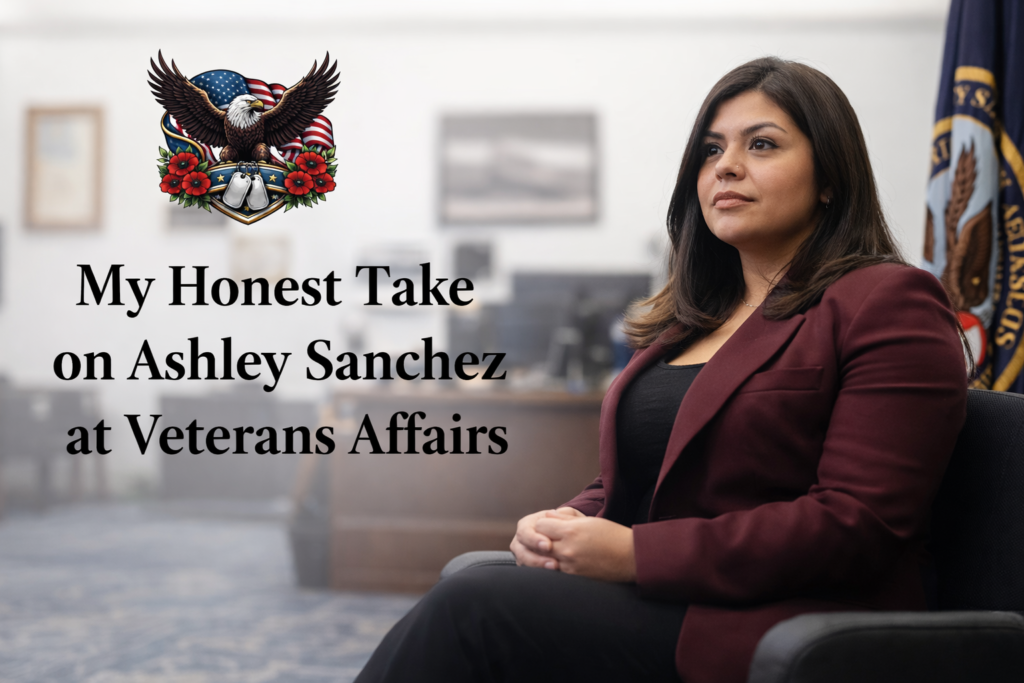
My Honest Take on Ashley Sanchez at Veterans Affairs

I’m a Navy vet. Paperwork scares me more than choppy seas. So when my knee got worse and my claim stalled, I walked into the VA office in San Antonio with a folder that looked like a sandwich. Messy. Overstuffed. A little sad.

That’s where I met Ashley Sanchez.

You know what? I walked out calmer than I walked in. Not perfect. Not fixed in a day. But better.

The first meeting: messy folder, steady help

Ashley greeted me with a small smile and said, “Let’s sort this.” Simple words, but I felt seen. It was July, hot as a skillet, and the waiting room was packed. I waited about 30 minutes. Not great. But normal.

She asked about my knee, my old MOS, and my last denial letter. She didn’t rush me. She didn’t talk down to me either. Big win.

Then she made a plan. One step at a time.

  • Start a new supplemental claim on VA Form 20-0995
  • Flag new medical notes from my last MRI
  • Ask my old squad buddy for a short statement (aka a buddy letter)

She typed as we talked. I could see the actions right there on the screen. Clear is kind.

Little things that mattered more than I expected

Here’s the thing. It wasn’t magic. It was small, steady moves.

  • She set me up on My HealtheVet and showed me where the “Blue Button” lives—turns out you can pull up your VA medical records anytime.
  • She explained Priority Groups in plain talk. I land in Group 2 now. It affects co-pays. Good to know.
  • She printed a simple checklist. Deadlines. Docs. Who does what.
  • She spoke Spanish to my mom on speaker when my mom called mid-visit. My mom relaxed. So did I.

Feels tiny, right? But when your brain is foggy from pain and forms, tiny feels huge. If you need a quick dose of perspective and purpose, the tributes on Freedom Remembered can remind you why every claim and appointment is worth the effort.

Real outcomes, not fairy tales

Two months later, my rating went from 60% to 80%. It took 11 weeks to see the back pay hit. She told me it might take 8–12 weeks. That was spot on.

Talking money felt weird at first. I kept mumbling that I’d be happy with whatever bump the VA would allow. Ashley stopped me and said, “Know your worth and claim it.” That line reminded me of an eye-opening rundown on What's Your Price? that explains why putting a concrete dollar figure on your value isn’t greedy—it’s strategic, and the same mindset helps when you’re fighting for the benefits you’ve earned.

She also helped me push a Community Care referral for physical therapy when the VA clinic was booked out. It wasn’t fast. It was fair. I got my first outside PT session in about four weeks.

And travel pay? I kept messing it up on the kiosk. Ashley stood there and walked me through it once. Now I can do it on my own. I even taught another vet in line last week. Felt good.

The hiccups and the fix

It wasn’t perfect. The office phone kicked me to voicemail twice. She called me back the next day, but I wish the system worked better. Also, one letter from the VA had my address wrong. She caught it, filed a correction, and re-sent proof to me by email. Annoying? Yep. Solved? Also yep.

When the PACT Act came up

I served near burn pits for a stretch. Ashley asked me the toxic exposure questions I usually dodge. She kept it straight. No drama. We added those notes. I booked a screening. I wouldn’t have done it on my own. That matters.

How to work with Ashley (and make life easier)

If you go see her, bring this stuff. It speeds things up.

  • DD214 (make a clean copy)
  • Any private medical records on a thumb drive or printed
  • Denial letters (all pages, even the boring ones)
  • Short buddy statements with dates and plain facts

One more tip: use a simple binder with tabs. Claims. Appointments. Letters. Receipts. Mine is blue. It lives by the door. I feel less lost.

For an even deeper dive into this prep work—complete with downloadable checklists and screenshots—you can skim my full guide to meeting with Ashley Sanchez at Veterans Affairs.

Who she’s great for

  • New vets who feel stuck on step one
  • Caregivers who need clear steps, not jargon
  • Spanish speakers who want to ask real questions in their own words
  • Anyone who’s overwhelmed by forms, timelines, and portals

What could be better

The office needs more staff. The wait gets long at lunch. An online scheduler with text reminders would save a ton of calls. And a direct line that doesn’t loop to nowhere? Please.

If the wait drives you to seek a little stress relief afterward, Houston’s Montrose neighborhood is a popular spot for laid-back bars and last-minute meetups; you can scan the local classifieds on Backpage Montrose to find live-music listings, casual hangouts, and other low-key ways to decompress without adding more paperwork to your day.

My bottom line

Ashley Sanchez shows up. She listens. She explains. She follows through. Not flashy. Not fast every time. But steady, which is what I needed.

Would I go back to her? Yes. I already did.

I’d call it a strong 4.5 out of 5. If the phone system behaved and the wait times eased up, it would be a clean 5.

If you’re staring at a stack of VA forms that makes your chest tight, sit down with Ashley. Bring your folder. Bring your questions. You’ll walk out with a plan—and a little more air in your lungs.

Published
Categorized as Veterans

My Honest Take on a Veterans Day Prayer I Used

Hi, I’m Kayla. Last November, I led a Veterans Day prayer at our town square, the school gym, and even around my kitchen table. Three places. Three moods. One big goal: say thank you with care.
If you’re curious about the deeper reflections that shaped those moments, you can browse my more detailed journal notes in this candid write-up.

It was cold that morning at the square. Flags snapped in the wind. The mic squeaked. A little boy in a red beanie saluted the wrong way, which was weird and sweet. I felt my throat tight. You know what? Saying the right words matters. But saying them simply matters more.

Here’s the thing: I tested a few prayers. Short ones worked best outside. Longer ones fit indoors. Below are the exact prayers I used. Word for word. Then I’ll tell you what landed, what fell flat, and what I’ll fix next time.


The Actual Prayers I Used

1) Short Public Prayer (Town Square, 8:05 a.m.)

God, we thank you for our veterans.
For their courage, their families, and the quiet nights they gave up.
Give peace to those who hurt.
Give rest to those who are gone.
Teach us to serve, even in small ways.
Today we remember. We are grateful.
Amen.

How it felt: People nodded. A few wiped tears. The wind was loud, but the words were clear and easy to hear.


2) Simple Inclusive Prayer (School Assembly, 10:30 a.m.)

Maker of all, we pause and give thanks.
For veterans who stood watch while we slept.
For those who came home changed.
For those who did not come home at all.
Hold their families close.
Make us brave and kind in our own lives.
We remember. We honor. We say thank you.
Amen.

How it felt: The principal gave me a thumbs-up. Kids stayed quiet. The band started “Taps,” and the room held still. It was a good still.


3) Table Grace for Veterans Day (Home Dinner, 6:15 p.m.)

Lord, thank you for this food and this day.
We remember our veterans with full hearts.
Bless those who serve now, near and far.
Bless the empty chair, if there is one.
Help us keep faith, keep hope, and keep watch for each other.
Amen.

How it felt: My dad squeezed my hand. My son asked, “Who is the empty chair for?” We talked. That talk was the point.


4) Quiet Moment Script (Workplace Huddle, 9:00 a.m.)

Today we pause for our veterans.
Let’s hold ten seconds of silence.
(Count to ten slowly.)
Thank you.
May we honor their service with our work, our words, and our care.

How it felt: No “Amen.” That fit our mixed crowd. Simple. Respectful. No one shuffled. Even the coffee machines seemed to hush.


What Worked For Me

  • Short lines. Big ideas. Easy to say, easy to hear.
  • Clear thanks. Not flowery. Just real.
  • A pause. I counted slow in my head. People need a beat to feel.
  • Inclusive tone for public events. At church, I used “Lord.” At school, I said “Maker of all.”
  • Names matter. I asked the VFW list the night before, so I wouldn’t trip.

Honestly, I also peeked at resources. I checked the VA ceremony guide, read a sample from The American Legion, and talked to folks at our VFW post. I didn’t copy their prayers, but their outlines helped me shape mine. One that grounded me was the official Veterans Day prayer offered by the U.S. Conference of Catholic Bishops. I also skimmed this set of five simple prayers for veterans from Guideposts when I needed fresh wording ideas.
Reading about Ashley Sanchez’s thoughtful work at Veterans Affairs broadened my view of how individual voices can influence public remembrance.
If you want to read personal tributes that spark heartfelt words, take a moment to browse the stories on Freedom Remembered.


What Didn’t Work (Yep, I messed up a bit)

  • I made one version too long. The wind ate the last lines.
  • I said “fallen” three times. It felt heavy and stuck.
  • The mic popped on “peace.” I should’ve tested the P’s.
  • I almost used a lot of church words at the school. I pulled back. That was the right call.

Little Tweaks That Helped

  • Practice out loud with a timer. My sweet spot: 30–60 seconds outside, 60–90 inside.
  • Keep paper notes. Phones glare and lock at the worst time.
  • Ask a veteran to review your draft. Two minutes of feedback saves the day.
  • Leave one line of silence. Let people breathe.
  • If you read names, check the sound of each name. Twice.

Pros and Cons (Straight Talk)

Pros

  • Warm, respectful tone that fits many groups
  • Easy for kids and adults
  • Works with “Taps,” bell ringing, or flag fold
  • Short enough to hold attention

Cons

  • Wind and long lines don’t mix
  • Some folks want more faith-specific words, others want fewer
  • Mics turn small mistakes into big ones

Who This Style Fits

  • School assemblies and Scout meetings
  • City ceremonies and courthouse steps
  • Work huddles where beliefs vary
  • Home meals where you want a gentle start

If you’re leading a full service at church, use the second prayer as the opening, then add a reading, a hymn, and a longer blessing. Keep the same simple voice.


My Verdict

Would I use these again? Yes. With small edits for the crowd and the room. I’d keep the bones: clear thanks, simple lines, a moment of silence, and one strong closing word.

Because Veterans Day is about memory. We say thank you. Then we say it again. And again, with care.

Sometimes, after a moving ceremony, a few friends tell me they feel both grateful and suddenly aware of how much they’d enjoy some light-hearted conversation—something totally different from the solemn mood. If that sounds familiar, you might check out SPDate for a quick, no-pressure way to meet and chat with new people who share your interests, giving you a breezy social outlet once the flags are folded and the crowd heads home.

A buddy of mine down in Georgia adds an extra twist: when the speeches end and the band cases their instruments, she likes to see what impromptu gatherings are popping up around town. If you’re near Warner Robins and want to keep the camaraderie going, the local listings on One Night Affair’s Backpage Warner Robins highlight spur-of-the-moment meet-ups, easygoing coffee hangouts, and other casual ways to unwind, so you can shift from ceremony mode to community fun without missing a beat.

If you need a last tip, here it is: look people in the eye on the final line. Say “We remember” like you mean it. Because you do.

Published
Categorized as Veterans

Who’s Considered a Veteran? My Real-Life Check

I’m Kayla, and folks ask me this a lot. Sounds simple, right? It’s not. I learned that while helping my family sort out benefits, forms, and a few surprises. You know what? The rules are clear, but the paths people take are not.
If you need the bare-bones checklist, check out my full breakdown on who’s considered a veteran.

Let me explain what I saw, what worked, and what didn’t.

The Basic Rule (The One I Keep Coming Back To)

A veteran is someone who served in the active military, naval, or air service—and was discharged under conditions other than dishonorable.

Short and plain. But life adds twists.

Title 10, Title 32, and That Guard/Reserve Question

Here’s where people get stuck. My cousin was in the National Guard. He drilled on weekends for six years. No federal activation. He wore the uniform, no doubt. But for many VA benefits, he wasn’t counted as a veteran. That stung.

Then my friend Marco—also Guard—got called up on federal orders (Title 10) and deployed. He’s a veteran. He used his GI Bill to finish school and bought a tiny ranch house with a VA loan. His DD214 made that part easy.

So, Guard and Reserve count when you’re federally activated. State-only duty (Title 32) usually doesn’t count for VA “veteran” status, though some states still honor you as a veteran for state perks. Weird? A little. True? Yes. You can see how the VA spells it out on their dedicated Guard and Reserve benefits page.

Real People, Real Calls

  • My next-door neighbor, Navy, four years active, honorable discharge: veteran. He took night classes with his GI Bill and still makes a perfect cup of drip coffee. Steady guy.

  • My aunt served in the U.S. Public Health Service Commissioned Corps. She responded to storms and outbreaks. For many federal rules, that service is treated like active duty. She got care through the VA for a work injury. Not every program is the same, but she counted.

  • My neighbor’s dad crewed on a Merchant Marine ship in World War II. He’s recognized as a veteran for certain benefits. He keeps a box of medals under the bed and talks about the sea when it rains.

  • My coworker had an “other than honorable” discharge. He wasn’t sure what he still qualified for. The VA did a character-of-service review. He ended up getting health care tied to a service injury. Not everything, but not nothing. Hard road, but worth the call.

  • A kid from my street did ROTC in college only—no active service. Not a veteran. He thought summer training might count. It didn’t.

  • A friend from high school served in the Coast Guard, five years. Yes, the Coast Guard counts. She’s as salty as a pretzel and twice as sharp.

  • And yes, Space Force too. My cousin says “Guardian” and smiles. It counts the same as the Air Force.

  • If you’re following advocacy wins, take a look at Ashley Sanchez’s experience at Veterans Affairs—her persistence is a masterclass in navigating the system.

Discharge Status Matters (Sometimes a Lot)

  • Honorable or General (Under Honorable): usually fine.
  • Other Than Honorable: case-by-case. The VA can review it.
  • Bad Conduct or Dishonorable (from a court-martial): usually no benefits.

I watched someone carry this like a weight. Paper can follow you. But reviews exist. Don’t give up if the story isn’t neat.

The 24-Month Thing That Trips People Up

If you joined after 1980, many VA benefits expect 24 months of continuous active duty. But there are exceptions: early outs, hardship, and medical separations.

My friend Lena was medically separated at ten months. She’s still a veteran. She got VA care for her knee. She also keeps a small garden and swears dirt helps more than yoga.

Wartime vs. Peacetime (Both Count, But Differently)

Yes, peacetime service still makes you a veteran. For some programs—like the VA pension—wartime dates matter. My uncle served from 1976 to 1978. He’s a veteran. He didn’t meet wartime rules for pension, but he got other help. He also grills the best chicken on the block. Important detail, I think.

Who Isn’t Considered a Veteran (Even If It Feels Close)

  • ROTC or service academy students with training only and no active service
  • Contractors and civilian staff working with the military
  • Guard or Reserve with drills only and no federal activation (note: state benefits may still honor them)

That last one catches people. Please don’t take this as shade. Service is service. The label ties to programs, and programs have rules.

How You Prove It (Bring Papers, Not Just Stories)

When I helped a friend get a VA home loan, we needed the Certificate of Eligibility. That came from his DD214. If you’re Guard, your NGB-22 helps. Old orders help too. Keep them in a folder. Or scan them and send them to someone you trust. Paper gets lost when life gets loud.

Quick Hits I Get All the Time

  • Coast Guard? Yes.
  • Space Force? Yes.
  • Only boot camp? Usually no.
  • Dishonorable discharge? No.
  • Activated Guard/Reserve on federal orders? Yes.

A Small Holiday Note

On Veterans Day, I set out coffee and pie. People stop by. Some talk. Some don’t. I don’t push. Labels matter for benefits. But the person matters more. Still—if a label gets you care, school, or a loan, use it.
If you want to read personal stories of those who served and sacrificed, you can browse the memorial pages at Freedom Remembered, which always gives me perspective. I also shared my honest take on the Veterans Day prayer I used that morning, in case you’re searching for words that feel real.

Final Take

Who’s considered a veteran? It depends on active service, discharge type, and the exact program you’re asking about. That sounds dry. But it’s your health, your house, your school.

By the way, if you’ve recently transitioned out and are trying to rebuild your social circle in a new town, you might be browsing online classifieds to find veteran meet-ups, hobby groups, or even a roommate. Instead of the now-retired Craigslist personals, you can check out this practical rundown of Doublelist that explains how the platform works and the safety steps you should follow before setting up any in-person meet-ups. For veterans settling in Orange County, California, and wanting a bulletin board that zeroes in on the local scene, you could also look at Backpage Fullerton, which curates community and personals ads specific to the Fullerton area so you can connect with nearby neighbors without wading through state-wide listings.

If you’re unsure, talk to a County Veteran Service Officer. Bring your papers. Ask two times if you need to. Honestly, I would. And before any appointment, take five minutes to skim the official VA service-member benefits overview; it’s surprisingly clear.

Published
Categorized as Veterans

Veterans Facing Eviction in Atlanta: My Week on the Edge

I’m a former Army supply clerk who lives on the Westside. I wish this was easy to tell. It wasn’t. Two slow months at work, a sick kid, and boom—I fell behind on rent. Then I got the paper on my door. That knock? It felt like thunder. For the full play-by-play of that chaotic stretch, I wrote a separate diary-style recap on Freedom Remembered.

Here’s what happened, who I called, what actually helped, and what I’d do again. I used these services myself—no guessing. Just straight talk from a tired mom who still loves a good Braves game and a sweet tea.

The Paper and the Panic

The court paper said “dispossessory.” I had never even said that word out loud. It’s an eviction case. In Georgia, you get about a week to answer. Seven days. Not long when you’re juggling kids, a long bus ride, and a boss who’s side-eyeing your hours.

I went online and answered the case that night at my sister’s kitchen table. Sticky notes, crumbs, everything. I said, “I can pay part now, and I’m working on help.” Was it perfect? No. But it stopped a quick lockout. That was the first small win.

Who Helped Me (And How It Felt)

HOPE Atlanta – SSVF (Supportive Services for Veteran Families)

I called HOPE Atlanta first because other vets told me. They checked that I’m a veteran and asked for proof—DD214, ID, lease, and the past-due amount. It’s a lot of paperwork when your brain is buzzing, but my case manager, Ms. T, broke it down step by step. If you’re scratching your head about whether you even count as a veteran for these programs, I unpack the fine print in this candid checklist that might save you a phone call.

  • What they did for me: They paid part of my back rent, plus the late fees my landlord wouldn’t drop. They also gave me a grocery card and a MARTA pass for two weeks. Not fancy, but huge.
  • How fast: Intake took three days. Money took about a week more. It felt slow because I was scared, but that’s a fair pace for real dollars.
  • The tough part: Getting all the docs in clean scans. I ended up using the scanner at the library. Hot tip there.

Would I call them again? Yes. It kept my kids in their room with their posters still on the wall.

Court is loud. Even if it’s small. I called Atlanta Legal Aid first and got a call back the next morning. They were full that week, but they sent me to AVLF. A lawyer from AVLF met me before the hearing, right in the hallway. He looked at my lease, my proof from HOPE Atlanta, and a stack of texts with my landlord.

  • What they did for me: He helped draft a consent agreement. That’s a plan everyone signs: I pay a set amount by a set date; the case pauses. If I pay, it gets dismissed. Clear and simple.
  • How it felt: I could breathe. He translated “court talk” into normal talk. He didn’t treat me like a problem. That matters.
  • The tough part: Wait time on the phone was long. Bring water and a snack. No joke.

Veterans Empowerment Organization (VEO)

I went to VEO when I thought I’d have to leave the apartment for a few nights. Bed. Shower. Lockers. It wasn’t fancy, but it was safe. Staff knew my name by day two.

  • What helped: A bus pass, hot showers, real people that use “ma’am” and mean it. They even helped me print my lease.
  • What’s hard: Dorm beds and a curfew. I get it, it’s shelter, not a hotel. But still, it’s a shift.

United Way 211

I’ve called 211 more times than I can count. You repeat your story a bit, yeah. But they gave me three numbers I didn’t have: St. Vincent de Paul Georgia, Salvation Army Metro Atlanta, and a small church on Cascade that covered a piece of the late fee. Those little pieces add up.

  • Tip: Ask for “veteran rent help” and say your county. Fulton or DeKalb matters.

HUD-VASH at the VA

I asked about HUD-VASH. It’s helpful for longer-term housing—voucher plus VA case management. But it wasn’t quick for my crisis week. If you can get on the list, do it. It’s a seatbelt, not an airbag. Some of my feelings about the VA come from faces behind the desk—people like Ashley Sanchez. I share my unfiltered take on her approach right here.

Real Moments I Won’t Forget

  • I sat on a MARTA bench with a folder full of papers. I cried, then I laughed because my pen ran out mid-form. A guy handed me his pen and said, “Hang in there, sergeant.” I wasn’t a sergeant. But I took the pen.
  • My landlord didn’t answer my first call. I wrote a short text: “I have HOPE Atlanta working on payments. I can pay $200 Friday. Can we pause the case?” He answered two hours later: “Show me proof.” He’s not warm, but he’s not a monster. Proof matters.

What Didn’t Work (For Me)

  • Georgia Rental Assistance? That program closed. I wish I hadn’t spent two hours on an old link I got from Facebook.
  • Emailing huge files from my phone. Half of them bounced. Use a scanner app or a library scanner. Saves time and nerves.

For vets in other cities hunting for a fast side-gig to cover a stubborn late fee, local classified boards can sometimes save the day. One regional hub worth skimming is Backpage Lynn—the listings there often include same-day moving help, furniture pick-ups, and other quick-cash opportunities that can bridge the gap while you wait on formal assistance.

After chasing that dead rental-assistance link, I realized how many life-saving resources stay buried on page three of Google. If you volunteer with a church, run a vet-focused blog, or keep a small nonprofit website, making your hotline or donation page easy to find can literally keep someone housed. I dug into the free guides at 10xSEO and they translate search-engine strategy into plain English, offering checklists and case studies that help grassroots groups climb the rankings so veterans find accurate help the moment they need it.

What I’d Tell Any Vet Facing Eviction Here

  • Answer the court fast. Even a short answer helps.
  • Keep one folder. Lease, ID, DD214, past-due letter, pay stubs. Carry it.
  • Text your landlord. Be short and clear. Dates and dollars.
  • Call HOPE Atlanta (SSVF) and ask for intake. Be ready with docs.
  • Try AVLF or Atlanta Legal Aid if you have court. They speak judge.
  • Ask 211 for churches that can cover “the gap.” Sometimes it’s just $100 short.
  • Save screenshots of every promise and every payment.

For more stories that honor and uplift the veteran community, take a moment to explore Freedom Remembered and draw strength from those who’ve served before us.

My Take: The Good, The Bad, The Real

  • The good: Atlanta has a net for veterans. It’s stitched by real people who answer phones and say your name. When it works, it works.
  • The bad: It’s a maze. When you’re scared, even a simple form feels like a mountain. Also, help isn’t instant. That hurts when the clock is loud.
  • The real: You might still sleep with your shoes by the door. Just in case. But help plus proof plus a plan can keep that door yours.

If You’re Reading This at 2 A.M.

You’re not the only one awake. Drink some water. Put your docs in a folder. Set two alarms for the courthouse and call HOPE Atlanta when they open. If you can, text your landlord a plan tonight. Simple and honest.

You know what? I didn’t think I’d write any of this. I felt small. I’m not. You’re not. We wore uniforms. We can handle a form and a follow-up call.

I’m still in my place. My kid still has her glow-in-the-dark stars on the ceiling. That’s my review. It’s not perfect, but it’s home.

Published
Categorized as Veterans

I Donated My Old Car to Help Veterans — Here’s How It Really Went

You know what? Letting go of a car feels weird. Mine had crumbs in the cup holders and a tiny dent from a grocery cart. Still, it was time. I donated it to a veterans group. I’ll tell you what went smooth, what didn’t, and what I wish I had known.
For another candid perspective, check out this step-by-step account of donating a car to help veterans captured over at Freedom Remembered.

Why I Finally Let My Old Car Go

I had a 2008 Honda CR-V with 186,000 miles. The check engine light liked to tease me. Some mornings it blinked, some days it didn’t. The A/C was moody. The tires were new, though, which made me pause. Could I sell it? Sure. But school drop-off traffic already takes years off my life. I wanted it gone fast, and I wanted it to help someone.

Who I Chose (And Why)

I went with Vehicles For Veterans. They work under a national charity and set up local pick-ups. I also looked at DAV (Disabled American Veterans) vehicle donations and the Purple Heart Foundation’s program. All had clear steps. Vehicles For Veterans called back first, so that was that. Was that the most scientific choice? Nope. But it was quick and felt legit.
Not gonna lie—I had to look up exactly who the government counts as a veteran; this quick real-life check saved me some head-scratching.

Small note: not every dollar goes straight to veterans. There are towing and admin costs. I knew that going in. I wanted ease plus impact, not a perfect split.
If you want to see another way people pay their respects, the memorial stories collected at Freedom Remembered show how small actions ripple into lasting support for veterans and their families.

The Actual Pickup Day

I filled out a short form online around 9 p.m. They called me the next morning. We set a tow window for Thursday, 8–12. The driver showed up at 7:30 a.m. early, which made my dog think we had guests. He was kind, had me sign the back of the title, checked the VIN, and loaded the car in about 15 minutes.

I took off the plates. I grabbed my garage opener and the spare change under the seat. I found a melted crayon in the glove box and laughed. That car hauled science fair boards, soccer balls, and one very tired Christmas tree.

He handed me a pickup receipt. I snapped a photo of the odometer, because I’m that person.

What Happened After

That night I got an email thanking me. A week later, I got a letter with the tax receipt. They sold my CR-V at auction for $700. Was that lower than a private sale? Oh, for sure. But I also didn’t have to fix the O2 sensor, do a smog check, or haggle in a parking lot with a stranger named Brad. Trade-offs.
For anyone curious about how the IRS views vehicle gifts, the tax deduction rules hinge on whether the charity sells the car or puts it to work, so be sure to keep all your paperwork squared away.

At tax time, my accountant used the receipt. Simple. No headache. I kept the tow slip, the title copy, and the sale letter in one folder.

The Good Stuff

  • Pick-up was free and fast.
  • No repairs. No “will it even start?” drama.
  • Paperwork was simple. They walked me through the title.
  • My driveway looked huge the next day. I’m not kidding.
  • It felt good to support vets—transport help, housing aid, job support. Real needs.

The Not-So-Good

  • The sale price was lower than I hoped. Private sale would’ve paid more cash.
  • The tow window was a block of time. I waited around with cold coffee.
  • The call center put me on hold once for 12 minutes. Annoying, not tragic.
  • DMV rules are funky by state. In mine, I had to mail a release of liability.

By the way, if choosing the donation route leaves you pinching pennies for a bit, you might find yourself poking around online for no-cost ways to unwind as an adult. One surprisingly helpful roundup can be found at Free Sex Sites — it separates truly free adult-entertainment platforms from the upgrade traps, saving you both money and time you’d otherwise spend clicking through spam.

On a similar note, Northern California readers who prefer a strictly local classified vibe for meeting new people can browse the updated listings at Backpage Rancho Cordova where neighborhood-specific ads, user reviews, and built-in safety pointers make it easier to find genuine connections without wading through endless junk posts.

I almost forgot to cancel my insurance. That would’ve been dumb. I did it the same day the car left.

A Couple Other Real Stories

My friend Leah donated her 2006 Ford F-150 through DAV. Her pickup took a week to schedule. The driver had to use a jump box because her battery was toast. Her sale letter showed $1,050. She said the best part was knowing DAV helps with rides to VA appointments. The worst part? She had to find the lien release from 2011. She found it in a shoe box, somehow.

My cousin Rob used the Purple Heart Foundation’s program for a rusty Camry. His tow window got bumped by a day because of a storm. He didn’t mind. He just wanted the driveway space before his new baby came home.

Tips I’d Pass On (From My Messy Life to Yours)

  • Clear the car like you’re moving out. Check under seats and the visor. Twice.
  • Pull plates, garage opener, toll tag, and your charging cables.
  • Take photos of the car and the odometer. Future you will be glad.
  • Ask if they handle salvage titles or dead batteries. Most do.
  • Call your insurance and file any state notice right after pickup.

If your title needs a notary (some states do), ask the charity first. They know the drill. Mine didn’t need it.

Was It Worth It?

For me—yes. I traded a bit of money for a lot of time and a good cause. I didn’t want to fix parts, show the car ten times, or meet buyers in a grocery lot. I wanted simple. And I wanted to help veterans in a real way, even if some of my donation covered towing and admin. That felt honest, not sneaky.

Would I do it again? If the car’s rough, 100%. If it’s newer and clean, I might sell it and donate some cash. Both help. Both count.

Final Word, Then I’ll Stop Talking

If you have an old ride that sits more than it rolls, donating it to a veterans group is a solid move. It won’t make you rich. It will make your life lighter. And maybe—just maybe—it pays for a ride to a VA clinic, a bed near a hospital, or a class that opens a new door for someone who served.

That’s worth a quiet, happy sigh in a clean driveway. It was for me.

Published
Categorized as Veterans

My Take on the Santa Rosa Veterans Memorial Building

I’ve used this place a lot. Like, more than I planned. It’s not fancy. But it gets the job done, and that matters when you’ve got a crowd and a timeline. For a deeper dive into my first impressions and some photos, you can check out my standalone review on Freedom Remembered.

Why I keep coming back

It’s across from the fairgrounds, so it’s easy to find. The lot is huge. Even my uncle’s box truck made it in without stress. Does it look fancy? No. Does it work? Yes. That’s why I keep booking it.

Parking and first look

Parking is usually smooth. On fair days, though, it can get busy, so plan for that. Inside, the main hall is big and bright. The floors are clean and kind of echoey. You’ll see a stage, high ceiling, and a stack of tables and chairs. The smell is a mix of coffee, cleaner, and popcorn from some past event. It feels like “community,” which I like.

Booking and staff

I’ve booked the main hall twice and a side room once. The county office handled it. If you need the official specs—capacity charts, rental rates, or the calendar—you can find them on the county’s Santa Rosa Veterans Memorial Building rental page. Email replies were not super fast, but they were clear. The staff on site? Straight shooters. They walked me through the layout, showed me the roll-up door for load-in, and even helped me find extra chair carts when we were short on time. You know what? That help matters when you’ve got no sleep and a vendor asking where the outlets are.

Quinceañera night: lights, music, and a lot of shoes

Last spring, we hosted my cousin’s quinceañera here. We had about 220 guests. The stage fit a seven-piece banda with no problem. We ran a DJ from the side of the stage and put the sweetheart table front and center. I used warm uplights and put string lights across the room to soften the harsh ceiling lights. It worked. The room felt cozy, and people actually stayed on the dance floor. The floor can get a little sticky late in the night, so we did a quick mop before the first dance.

Load-in was simple. We used the big door near the back and pushed everything in on carts. Tables and chairs were included, but some chairs were scuffed. No drama. We covered with chair sashes. The AC kept up even with all the dancing. The sound had a bit of echo, so the DJ used extra speakers to fill the corners. That helped a lot.

Holiday craft market: rows, coffee, and happy noise

I also helped run a winter craft market here. We set 60 vendor booths in neat rows using blue tape. The hall swallowed that setup with room to spare. The PA worked fine for announcements (“raffle at noon!”). People flowed well from the entrance to the back, and the bathrooms stayed clean. Lines did build after lunch. Not a shock.

Vendors liked the easy access to power. Some outlets are older, so bring good surge strips. We had a cocoa table by the front doors, and it made the whole room smell like cinnamon. Little thing, big vibe.

Blood drive and a Veterans Day ceremony

One more: I volunteered at a blood drive in a side room last summer. The space was cool, quiet, and easy for donors. The staff made sure we had extra bins and a dolly for cases of water. Simple, but helpful. Outside of events, I also tried to give back in other ways—like donating my old car to a veterans charity—and that experience reminded me how every bit counts.

And Veterans Day? The main hall held the ceremony with the flag up on stage. The chairs lined straight, the sound was clear enough, and the moment of silence felt honest. It’s called a memorial building for a reason. It carries weight. I felt that. To deepen that connection, you can browse Freedom Remembered, a digital memorial that shares the stories of service members who gave everything. If you’re planning your own ceremony, here’s the simple Veterans Day prayer I leaned on and why it resonated with the crowd.

Sound, lights, and comfort

  • Sound: Big room echo. Manageable with good speakers and a few soft items (drapes, backdrops).
  • Lights: Overhead lights are bright and a bit cold. Warm uplights make it feel better fast.
  • Heat/AC: Both work. Summer events stayed comfortable. Bring layers in winter mornings—it starts chilly and warms up with bodies. The county just green-lit a $3.5 million energy-upgrade project, so expect the HVAC and lighting to get even more efficient in the coming months.

Food and kitchen notes

The kitchen is a workhorse. We kept trays of birria warm, used the big sinks, and packed the fridge tight. There’s space to stage catering and plate quickly. We brought our own ice, which I’d suggest. Also, check rules on alcohol. We had to show our insurance and follow their steps. No surprises—just read the sheet they give you.

What I love

  • Easy parking and load-in
  • Huge hall and a real stage
  • Staff who actually help
  • Budget-friendly for big groups
  • Tables and chairs on site

What bugged me

  • Echo without extra sound help
  • Harsh lights unless you bring your own
  • Some chairs are worn
  • Booking replies can be slow near peak dates
  • Shared parking can be tight during fair events

Handy tips if you’re planning an event

  • Visit during a live event to hear the room.
  • Bring warm LED uplights and a simple backdrop to cut the echo.
  • Tape a wide dance floor area so people don’t crowd the tables.
  • Ask about the roll-up door and confirm your load-in path.
  • Bring extra extension cords and a few power strips.
  • If you need quiet, choose a side room.
  • Check the fairgrounds calendar before you pick your date.

If your gathering leans toward an adults-only vibe—think a singles mixer, speed-dating night, or a flirt-friendly dance party—the spacious layout here lets you set up lounge areas and private conversation corners with ease. For anyone curious about how modern adults are meeting, mingling, and exploring intimacy outside traditional channels, the in-depth guide at Adult Sex Dating offers trusted platform reviews, safety checklists, and etiquette tips so you can navigate that scene smartly and confidently.

On a related note, some friends who travel for events ask me where they can find discreet, location-based classifieds for casual meet-ups while on the road. I usually point them to the up-to-date listings at Backpage Elizabethtown where they can quickly browse current posts, read user feedback, and connect with like-minded adults in a safe, streamlined environment.

Final word

This building won’t wow you with fancy trim or marble floors. But it works. It’s honest, roomy, and easy to use. I’ve laughed here, cried here, and hauled more folding tables than I can count. If you want a place that holds your people without breaking your budget, the Santa Rosa Veterans Memorial Building does the job—and with a little love, it can feel special. I’ll book it again.

Memorial Day vs. Veterans Day: How I Learned the Difference (and What I Do)

I used to mix these up. A lot of people do. Both days have flags, speeches, and big feelings. But they’re not the same. Not even close. For anyone who wants a straightforward, official comparison, this VA article walks through the core differences in just a few minutes.
If you want the full story of how I finally sorted out the two holidays, I broke it down in detail here.

Here’s the thing: one day is quiet. The other is loud. Both matter.

The quick difference I keep in my head

  • Memorial Day (last Monday in May): We honor those who died while serving. It’s about loss and love.
  • Veterans Day (November 11): We thank all who served. It’s about service and gratitude.

I say it like this to myself: Memorial = memories of those we lost. Veterans = thanks to those still with us (and those who served in the past).

My Memorial Day: quiet, flags, and “Taps”

Memorial Day feels heavy for me. It should.

I help place small flags at our city cemetery with the Scouts and a VFW post. There’s a color guard. We hear “Taps.” It’s one bugle, and the sound hangs in the air. Kids stop fidgeting. Grown-ups stop talking. It just… lands.

We visit my neighbor’s son’s grave. He died in Afghanistan. His mom brings sunflowers. I bring coffee and listen. No speeches from me. Just listening. That’s my job that day. I sometimes read the stories of others like him on Freedom Remembered, a place where every fallen hero’s name is kept alive.

At 3:00 p.m., there’s the National Moment of Remembrance. One minute of quiet. I set a timer. Even if I’m flipping burgers later, I stop. Eyes closed, hands still. Sixty seconds is short. It also isn’t.

I wear a red poppy pin from the American Legion Auxiliary. People ask what it is. I say, “It’s for folks we’ve lost.” Simple. True.

One thing I don’t love? Big flashy sales. I get that stores do them. But “Happy Memorial Day!” on a giant sign makes me wince. I try not to be preachy. Still… words matter.

My Veterans Day: thanks, pancakes, and grandpa’s stories

Veterans Day feels warm. Like a sweater and coffee kind of day.

We take my grandpa (Vietnam) to the VFW breakfast. He always gets two pancakes. He says the second one tastes better because it’s free. He’s a ham.

Our school has an assembly. Kids make posters. A Navy veteran reads a poem. The band plays the service songs. My niece points when she hears the Army song because it’s her dad’s. Pride looks good on kids.

We also hit a place that offers a free meal for veterans. Applebee’s does it most years. Dunkin has free donuts. Great Clips offers a free haircut or a card to save it for later. Lines can be long. Some places ask for proof. That’s fine. We bring his old ID and a photo anyway. Pro tip: go early or late to avoid the rush.

This day is loud in a good way—parades, clapping, handshakes. “Thank you for your service” still counts. Don’t overthink it. Just say it.

If your parade route or cemetery visit drops you anywhere near Avondale, Arizona, and you’re hunting for a place to grab coffee with a vet afterward—or maybe scope out a late-night open mic raising funds for military families—a quick scan of the local classifieds roundup at oneNightAffair’s Backpage Avondale can point you toward veteran-friendly businesses, last-minute event postings, and after-hours meet-ups without the hassle of calling every venue in town.

The part people get mixed up (and how I handle it)

Folks say “Happy Memorial Day!” with good hearts. I try to answer kindly. I say, “We remember,” or “Thinking of the families today.” If it’s Veterans Day and someone says it’s for fallen soldiers, I gently add, “Today we thank all who served—Memorial Day is for the fallen.” Soft voice. No scolding. If you’ve ever needed a refresher, the USO puts the distinction in simple terms.

Words can heal or sting. Tone helps.

Thinking about how intention changes everything—whether you’re quietly honoring a loss or loudly celebrating service—also made me reflect on the French idea of “candaulisme,” where people deliberately invite an audience into moments that are normally private; if you’re curious how that dynamic plays out online, this clear guide to the most popular candaulisme platforms lays out the key sites along with safety tips and etiquette basics so you can decide whether exploring that community is right for you.

What these days feel like to me

  • Memorial Day is a quiet room with a folded flag.
  • Veterans Day is a handshake and a warm plate.

Both have flags. Both have stories. One is grief; one is gratitude. But both are love.

Small ways to show respect (that aren’t hard)

  • Learn one name. Say it out loud. Share one story.
  • Show up for the ceremony. Even if it’s cold or it’s hot.
  • Wear a red poppy on Memorial Day. Ask a vet about their unit on Veterans Day.
  • Tip well if a vet gets a free meal. The server is working hard too.
  • Teach kids the 3:00 p.m. moment on Memorial Day. Phones down. Heads up.

You know what? Small things count. They add up.

My honest take: what works and what doesn’t

What works:

  • Community stuff. The Scout flag placements. The roll call of names. The school bands. Visiting dedicated spaces—like the Santa Rosa Veterans Memorial Building—also puts faces to the names and reminds me why the community pieces matter.
  • Clear signs. “We remember” on Memorial Day. “Thank you, veterans” on November 11.

What doesn’t:

  • Big party vibes on Memorial Day. Keep the joy, but add respect. You can grill and still be mindful.
  • Confusion that sticks. It’s okay to learn out loud. We all mess up. Just fix it next time.

A tiny story from each day

Memorial Day, two years ago: A Gold Star mom hugged me after the ceremony. She said, “Thanks for saying his name.” I said, “Of course.” We cried. The flag on her lap shook. I’ll never forget her hands.

Veterans Day, last year: My grandpa stood to clap at the end of the school program. He leaned over and said, “I like the trombones best.” On the drive home he told me a story I’d never heard—about a buddy who taught him to play cards on a ship. He laughed the whole time. So did I.

Final thoughts I keep close

Memorial Day is for the ones who didn’t come home. Veterans Day is for the ones who did. That’s the clean line.

Hold both days with care. Speak softly when it’s time to be soft. Speak up when it’s time to cheer. And always, always remember the people behind the uniforms. Not just the days. The people.